

Failure to Thrive
Reporting from the depths of parenthood

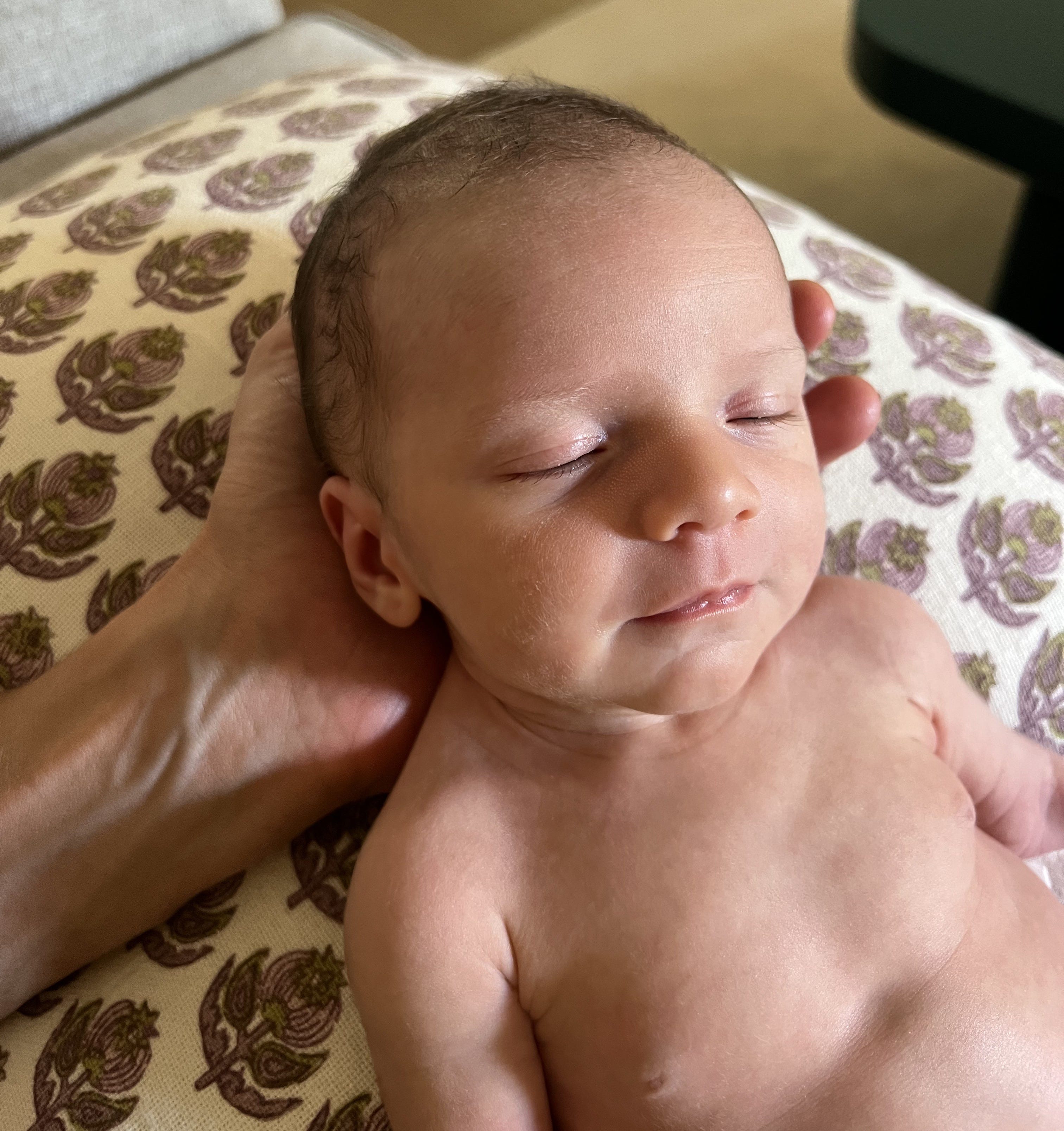
An old woman with heavy makeup stopped and looked at the three of us from across the lobby at Cedars-Sinai. “Oh my goodness, how much does she weigh?” she quivered. Kelsey and I had the look of people who had been parents for five days — a curious combo of doting and shell-shock — and we were back at the hospital for an unplanned visit. We regarded the old woman wearily. Five pounds, we said in unison. The woman’s wrinkled eyes were moist, the lids smudged green and purple and blue. She didn’t smile, but some pleasure was evident in the painted crevices of her vacant expression. “She is tiny,” the woman said, as if it pained her. We sighed and nodded. August, born at 37 weeks, was so sleepy and gassy all the time that she was barely eating, and Kelsey and I were in a hell of doubt and uncertainty. “She looks like a doll,” the old woman continued. Alright lady, move it along, I wanted to say. She continued standing there even though we didn’t respond. The interaction, with this Lynchian character who seemed intertextually plopped into our universe, got immediately singed into my brain. Even though at that moment I felt great disdain for her, I now cherish this old woman for her strange empathy.
Cedars-Sinai, any hospital really, is primo real estate if you’re into observing the human species. I have a long relationship with hospitals. I had a few major surgeries as a kid, and have always been drawn to the airs of massive institutions, labyrinthine buildings holding countless intersecting dramas and comedies and triumphs moving between states of immense chaos and quietude. Not to mention the politics. (I read recently that Cedars is lobbying the CIA for some sort of contract.) We were back at Cedars to take advantage of RFK’s new requirement that all newborns receive access to tanning beds.

Just kidding. August was getting phototherapy for jaundice, which is a treatment where blue light is used to disperse excess bilirubin in the blood. Auggie really enjoyed being inside that sauna-like hot box, and who wouldn’t. After getting the call about needing to go back to Cedars that day (during rush hour, and on the drive, we got a low tire pressure indicator), Kelsey and I had been so worried, our nerves so shot, that we didn’t realize, or think to ask, or were afraid to ask, about what exactly the situation was with August’s jaundice in the first place. But then our boy Mitch, a pediatric RN who has the luckiest wife in the world, told us that jaundiced babies in the US and other places with decent medical infrastructure very rarely die or have serious complications from jaundice. Kelsey and I kind of looked at each other like “Oh” and then we settled in for another night of hospital food, which at Cedars, is not too shabby: fish with lemon, mashed potatoes, matzoh ball soup. We were sent home the next day, but then a couple nights after that, we were told to go back to Cedars again because Kelsey had postpartum hypertension. I felt on the verge of an emergency myself, and remembered how one of the nurses, at a panic moment during the delivery, said that dads/partners often become the third patient. But the stress subsided when it was clear Kelsey would be ok, and we were sent home, finally home, the following day.
About a week after that I looked at our profile on the pediatrician’s website and saw the official diagnosis for August’s condition: failure to thrive. This made it feel like a personal attack not only on August, but on our capacity as parents. Also, what’s with the recent lexiconical obsession with the word “thriving”? Maybe it’s because we live in an era of stuntedness and collapse, so it’s impressive when things turn out better than bad. Anyway, together and as individuals, Kelsey and I tend toward organization, anxiety, and overachieverness. That our daughter’s life was off to this kind of start was deeply painful to us and our pride. An important life lesson was (re)learned: Preparation and merit only get you so far. But they definitely come in handy.
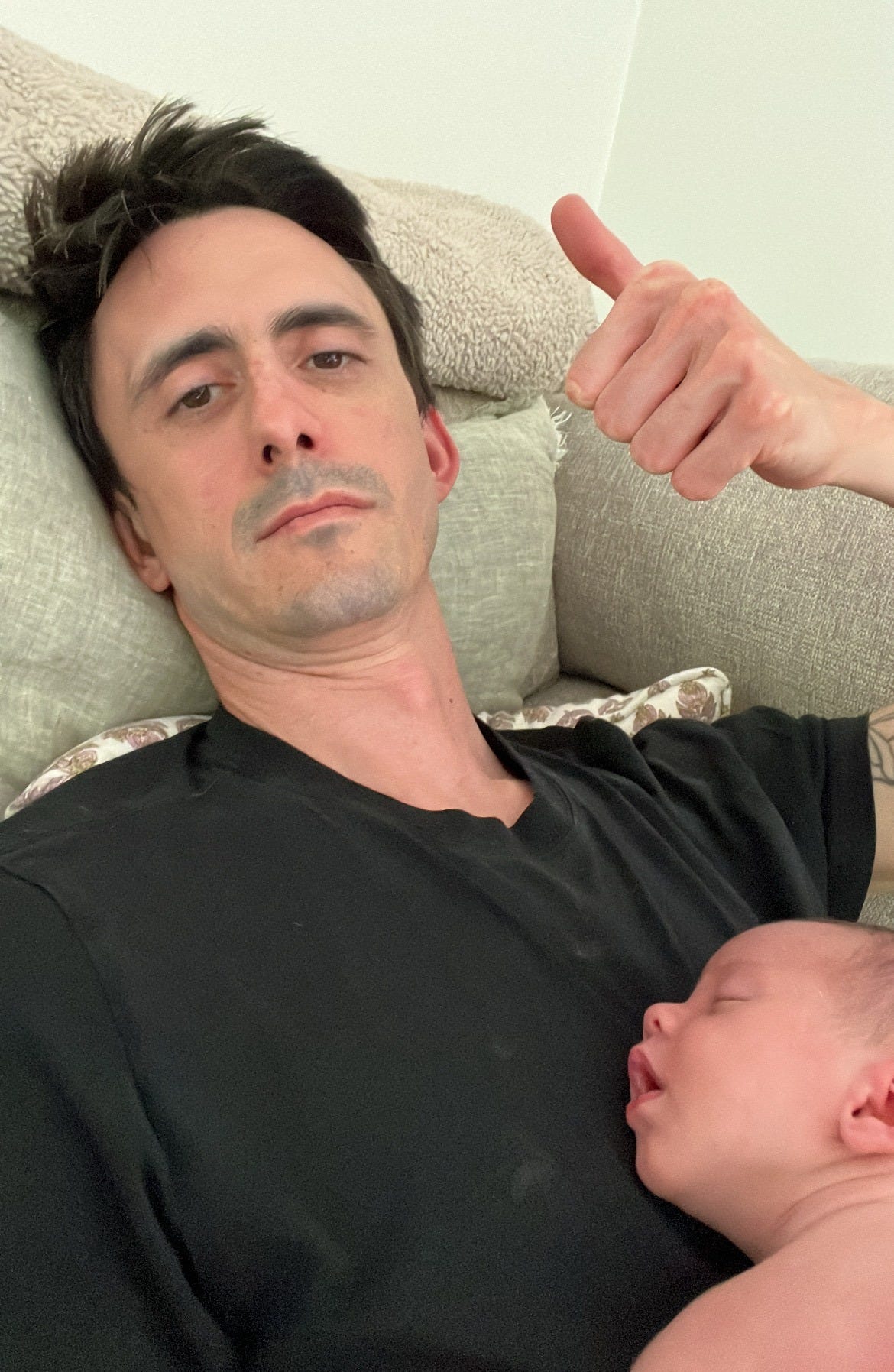
Today marks a month since August was born, and after those first couple bumpy weeks, got into a kind of rhythm. A fevered, hazy, often asynchronous rhythm, but a rhythm still. Time now is structured around eating, shitting, hiccuping, burping, and sleeping. We’re running a tight little biopolitical regime in our apartment, constantly tweaking the regulatory apparatuses of keeping our daughter alive and tracking everything in an app that shows you detailed reports of when and how much eating, shitting, and sleeping is happening. The competitive tyrannies — Kelsey and I versus Child — are starting to negotiate and find common ground. We have shared strategic interests.
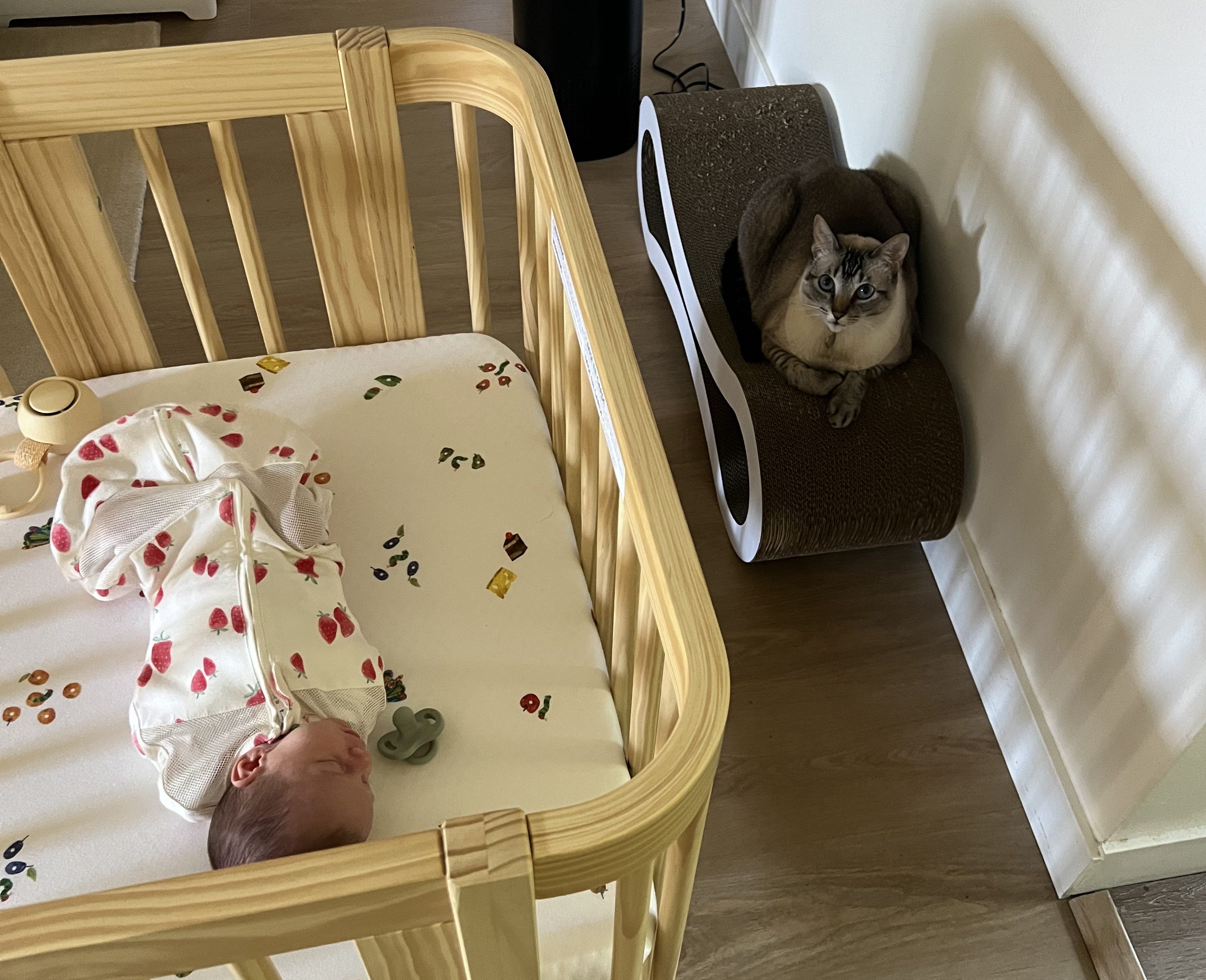
On the geopolitical chessboard that is this new family, Carmy was at first totally neutral. Like any great cat, she moves from neutral, to trustworthy partner, to insurgent terrorist. When we first brought the baby home it was like Carmy had no idea that there was even a baby in the house, just that something was different. One time when August was crying Carmy pawed at a burp cloth, frightened that this inanimate thing was wailing. It’s really weird. As time’s gone on though, she’s becoming less blind to Auggie, starting to sniff the top of her head and watching her. Carmy has also taken to just straight up sleeping in Auggie’s bassinet. It’s clear the direction her allegiances are heading in.
During one of what felt like dozens of medical visits in the first two weeks, the doctor inspected our child with a dour look on his face. He said he saw no signs of yellow. The jaundice had cleared, everything looked fine. He leaned down with his cold steel stethoscope and placed it on her tiny chest, no bigger than the size of my palm, and listened for whatever telltale sign. We waited with bated breath, the room tense and still and quiet. The doctor moved the stethoscope to another spot. I heard my own heart beating in my chest. Then August let out an Earth-shattering rip of a fart at a volume that should be impossible for something that’s not even six pounds. The doctor’s expression didn’t change, but Kelsey and I laughed and laughed and laughed and we’re still laughing.